Eternity Band Carat Weight: What You Get at Each Size
925 sterling silver jewellery, set with lab grown diamonds and made in our own Shenzhen workshop.
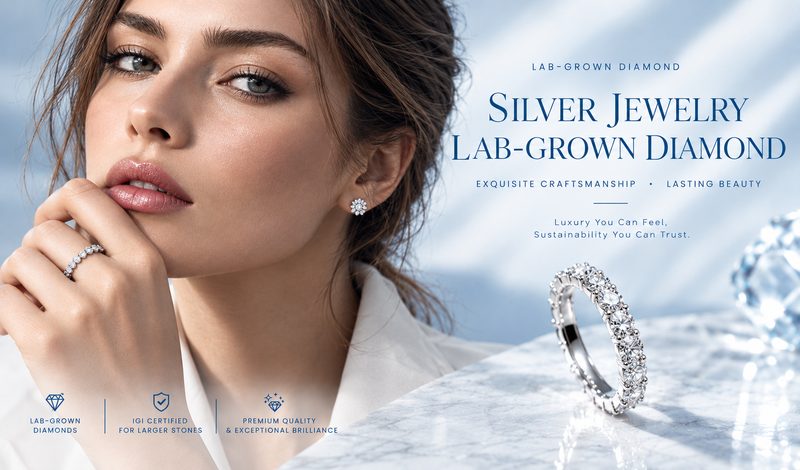
Ask what an eternity band weighs and the answer is almost meaningless on its own. A one carat total can be forty small stones set across a narrow band, or a dozen larger stones across a wider one, and the two look completely different on the hand. Total carat weight is the sum of three variables — stone size, stone count and whether the band is full or half — and it only becomes useful once those are known. Working through the three in order is what makes two quotes comparable.
How is eternity band carat weight built?
From the stone size the band width allows, multiplied by how many fit, multiplied by full or half.
A band of a given width accepts stones up to a certain diameter; anything larger requires a wider band. That sets the stone size. The band’s circumference then determines how many stones of that size fit, which sets the count. Finally, full eternity uses the whole circumference while half eternity uses roughly the visible half, halving the count and therefore roughly halving the total weight.
Change any one of the three and the total moves. This is why a buyer comparing two bands on total carat weight alone is comparing almost nothing.
Stone size against band width
Width is the constraint that decides everything else.
| Band width | Practical stone size | Look | Typical use |
|---|---|---|---|
| 1.8–2.2 mm | 1.3–1.7 mm | Fine line of sparkle | Stacking, delicate bands |
| 2.5–3.0 mm | 1.8–2.4 mm | Clearly visible stones | Most half and full bands |
| 3.5–4.0 mm | 2.5–3.0 mm | Pronounced, individual stones read separately | Statement and anniversary bands |
| 4.5 mm and above | 3.0 mm and up | Each stone is a feature | Wide bands, layered looks |
Pushing a large stone into a narrow band leaves too little metal to hold it, which is where worn prongs and lost stones begin. The width has to accommodate the setting, not just the stone.
Full against half: the same look, half the weight
Half eternity reduces the count, the weight and the cost, and adds a resizing option.
A half eternity band sets stones across the section that shows and leaves the underside plain. On the hand, from the viewer’s side, the two are frequently indistinguishable. The differences are weight, price and flexibility: a half band carries roughly half the stones, which halves the stone cost, and the plain lower section is where a jeweller can cut to adjust the size.
A full eternity looks identical when the hand turns, which matters on a band seen from all angles, and it removes the plain working area entirely. The wider comparison between wedding bands and eternity rings covers how the two styles pair with other rings.
Where the weight actually goes
The relationship between stone size and weight is cubic, not linear.
A stone twice the diameter weighs several times as much, so moving up one step in stone size increases total carat weight and cost faster than most buyers expect. That is why a band with visibly separate stones often carries far more weight than a band with a fine line of sparkle, even when the two look similar at a glance from a distance.
It is also why the stone size range, not the total, is the number to ask for first. A supplier quoting a total without stating the size range is giving half an answer.
The three numbers that make a quote comparable
Stone size, stone count and total weight — in that order.
Two bands with a one carat total can be a fine band of many small stones or a wider band of fewer larger ones. Comparing them by weight alone treats them as equivalent when they are not. Add band width and whether the band is full or half, and the picture is complete enough to compare price.
The matching tolerance belongs in the same conversation, because in a continuous run the eye notices inconsistency between neighbouring stones more than any single grade.
Colour and clarity at this scale
In small stones, the grades that matter most are the ones you can actually see across a run.
Individual colour and clarity grades read differently on a 1.5 mm stone than on a one carat centre stone: there is simply less material and less surface for an inclusion to be visible in. What does read is consistency — a single stone that looks greyer or warmer than its neighbours stands out immediately across a continuous band.
The practical specification for a band is therefore a tight colour band and a stated matching tolerance, rather than an ambitious clarity grade that no one will see.
Weight and comfort
Beyond a point, additional weight stops improving the look and starts affecting wear.
A heavier band carries more metal and more stones, which makes it sit more solidly and turn less on the finger, but also makes it more noticeable when the hand closes. A full eternity with stones on the palm side adds contact pressure at exactly the point where the finger flexes. That is a comfort issue rather than a design one, and it is the most common reason a full eternity band is eventually worn less often than its owner expected.
Width and profile, together with the full or half choice, decide comfort more than the total weight does.
Comparing two quotes properly
Six lines to put side by side.
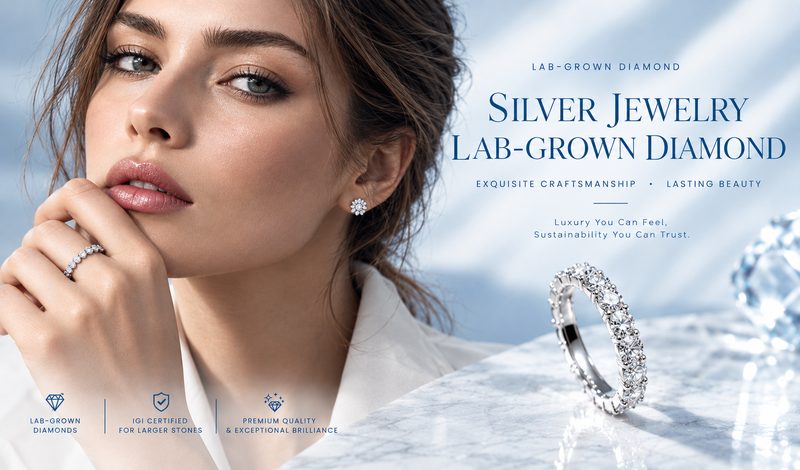
One: band width in millimetres. Two: stone size range. Three: stone count. Four: total carat weight. Five: full or half eternity. Six: metal, and whether the band is plated. With those six, a price difference becomes explicable, and keeping the first five equal is the only way to compare metal or workmanship rather than specifications.
Where a supplier cannot provide the stone count and size range, the total weight is not a specification but a description.
Choosing a size that ages well
Choose the width first, then the stone size the width allows, then the full or half decision.
Buyers who start from a total carat figure usually end up with a band whose width they did not choose. Working the other way round — width, then stone size, then count, then full or half — keeps every decision deliberate. For a first band, a 2.5 to 3 mm half eternity with stones in the 1.8 to 2.4 mm range is the combination that balances visibility, comfort and the ability to resize.
If the band is intended to sit alongside an engagement ring, confirm the profile match before fixing the width.
FAQ
How many carats are in an eternity band?
There is no standard figure, because the total is built from stone size, stone count and whether the band is full or half. Two bands described as one carat total can carry forty small stones or a dozen larger ones. Ask for stone size range, count and total weight together rather than the total alone.
What is the difference in weight between full and half eternity?
A half eternity band sets stones across roughly the visible half of the band, so at the same stone size it carries about half the stones and roughly half the total weight. The visible difference on the hand is often minimal, which is why half bands are the common choice.
Does more carat weight make an eternity band look better?
Up to a point, then not. Beyond a certain width and stone size, the stones read individually rather than as a continuous line, and the extra weight adds contact pressure at the palm side of the finger. Width and profile affect comfort and appearance more than the total weight does.
Can a full eternity band be made smaller?
Only by rebuilding it. With stones running the whole circumference there is no plain section to cut and rejoin, so resizing means removing stones and re-setting the ends. That is why a half eternity, which keeps a plain underside, is the safer choice when the final size is not certain.
Sources and further reading
- GIA 4Cs — carat weight and how it relates to size
- GIA — grading scales used to match a run of stones
- International Gemological Institute — diamond grading and reports
- Assay Office — precious metal standards and hallmarking
- CIBJO Blue Books — diamond and precious metal terminology
- International Gem Society — band construction reference
Next step: Tell us the band width you are considering and whether you need full or half eternity, and we will come back with the stone size range, count and total weight for each option so the choice is made on specifications rather than on a single figure. Ready-stock bands and OEM programmes are both available. Contact vinico@zkzdiamonds.com or WhatsApp +86 135 3037 8229.
{“@context”:”https://schema.org”,”@type”:”FAQPage”,”mainEntity”:[{“@type”:”Question”,”name”:”How many carats are in an eternity band?”,”acceptedAnswer”:{“@type”:”Answer”,”text”:”There is no standard figure, because the total is built from stone size, stone count and whether the band is full or half. Two bands described as one carat total can carry forty small stones or a dozen larger ones. Ask for stone size range, count and total weight together rather than the total alone.”}},{“@type”:”Question”,”name”:”What is the difference in weight between full and half eternity?”,”acceptedAnswer”:{“@type”:”Answer”,”text”:”A half eternity band sets stones across roughly the visible half of the band, so at the same stone size it carries about half the stones and roughly half the total weight. The visible difference on the hand is often minimal, which is why half bands are the common choice.”}},{“@type”:”Question”,”name”:”Does more carat weight make an eternity band look better?”,”acceptedAnswer”:{“@type”:”Answer”,”text”:”Up to a point, then not. Beyond a certain width and stone size, the stones read individually rather than as a continuous line, and the extra weight adds contact pressure at the palm side of the finger. Width and profile affect comfort and appearance more than the total weight does.”}},{“@type”:”Question”,”name”:”Can a full eternity band be made smaller?”,”acceptedAnswer”:{“@type”:”Answer”,”text”:”Only by rebuilding it. With stones running the whole circumference there is no plain section to cut and rejoin, so resizing means removing stones and re-setting the ends. That is why a half eternity, which keeps a plain underside, is the safer choice when the final size is not certain.”}}]}
Part of our sterling silver rings guide.
Recommended
 Does a lab-grown diamond need Kimberley Process paperwork when shipped?Lab Grown Diamond Guide
 Is it better to buy a loose lab-grown diamond and set it, or buy finished jewelry?Lab Grown Diamond GuideHow do I choose a bypass or open ring that stays comfortable?Lab Grown Diamond Rings
 How do I choose between a solitaire, halo and three-stone ring?Lab Grown Diamond Rings
 Is Lab Grown Diamond Jewelry a Good Investment?Buying Guides
 What is a “hearts and arrows” cut, and is it available in lab-grown stones?Lab Grown Diamonds