Lab Grown Diamond Wedding Bands and Eternity Rings
925 sterling silver jewellery, set with lab grown diamonds and made in our own Shenzhen workshop.
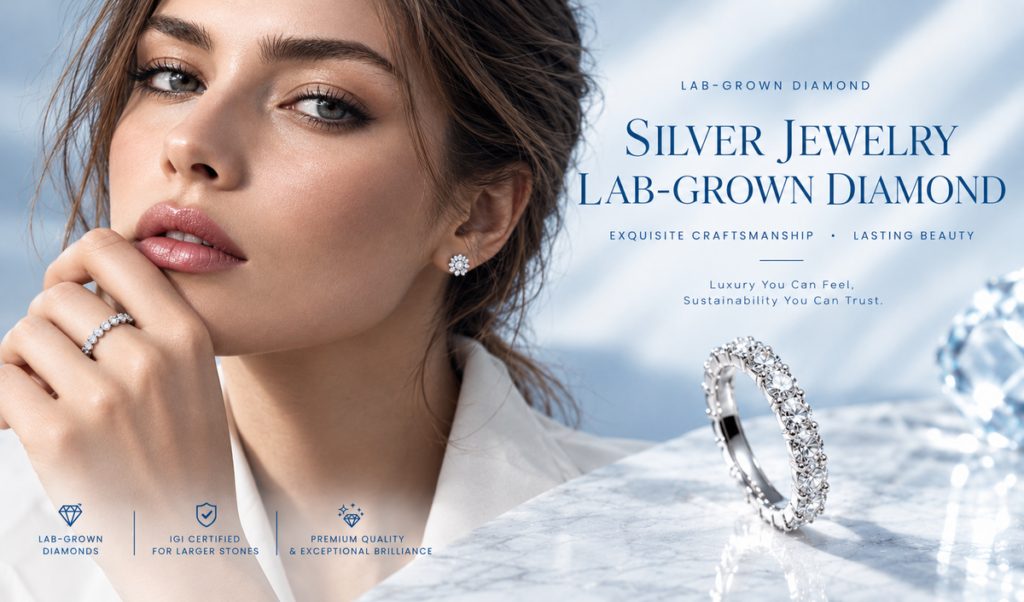
A full eternity band comes back for resizing and cannot be resized. The stones run the whole way round, so there is no plain section for a jeweller to cut and rejoin, and shortening means removing stones and rebuilding the ends. It is the most common expensive surprise in wedding jewellery, and it comes from a decision made at the order stage rather than from any fault in the ring. Understanding the trade between a full and a half band, and between stone size and comfort, prevents it.
Full eternity or half eternity?
Half eternity if the ring may ever need resizing; full eternity if the size is certain and the look matters more.
A half eternity band sets stones across the visible portion and leaves the underside plain. That plain section is where a jeweller works when adjusting size, which keeps resizing straightforward. A full eternity sets stones all the way around, so the band looks identical when the hand turns — a real visual advantage on a band that is seen from every angle — but it removes the working area.
Where fingers are expected to change with age, or where the ring is being bought before the final size is stable, the half band is the practical choice.
The two styles compared
Appearance against practicality, with the differences concentrated in one place.
| Variable | Half eternity | Full eternity |
|---|---|---|
| Stones visible | Across the top half only | All the way round |
| Resizing | Usually possible by one or two sizes | Requires rebuilding; often not practical |
| Repair of a worn stone | Local to the visible section | Anywhere around the band |
| Comfort | Plain underside is smooth against the finger | Stones on the palm side can catch |
| Cost at the same stone size | Lower, fewer stones | Higher, more stones and more setting |
| Best for | Most wearers, uncertain sizing | Stable sizing, maximum visual consistency |
Stone size and count by band width
Band width sets the ceiling on stone size; anything larger requires a wider band.
A narrow band of around 2 mm takes small stones, typically in the 1.3 to 2 mm range, and the count rises quickly because each one is small. A 3 mm band accommodates stones from roughly 2 to 2.75 mm and is the width most half eternity bands settle at, because it carries visible stones without becoming heavy. Above 4 mm, larger stones become practical — from 3 mm up — and the band starts to look like a statement piece rather than a wedding ring.
Total carat weight follows from those three variables together: stone size, count and whether the band is full or half. Two rings described as one carat total can look completely different depending on how the weight is distributed.
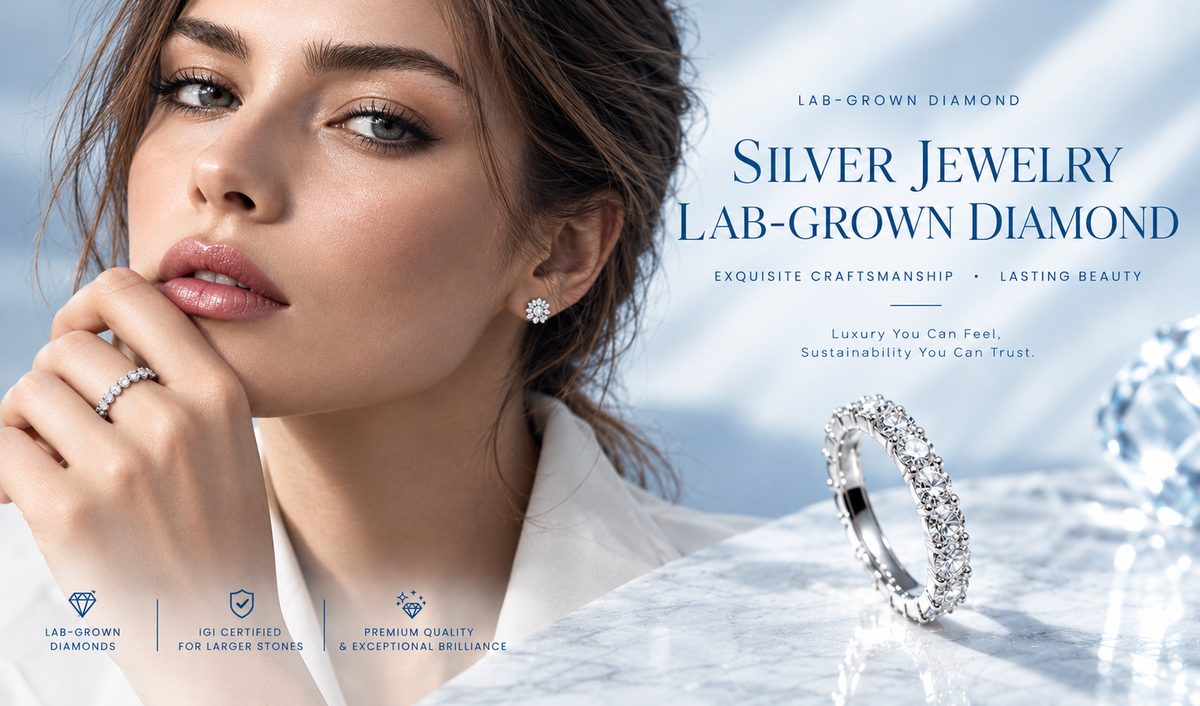
Sizing constraints, in detail
Three specific situations where a full eternity becomes a problem.
The first is any change in finger size, which happens with weight change, pregnancy, temperature and age. The second is knuckle size: a band that fits the base of the finger may not pass over the joint, and a full eternity cannot be opened to help. The third is repair: if a stone near the palm side works loose, replacing it means working on the section in contact with the finger.
For a half eternity, all three cases resolve into an ordinary jeweller’s job. That is the whole practical argument.
Metal choice for a band worn daily
The band takes more abrasion than any other piece, so the metal matters more here than on a pendant.
White gold is the conventional pairing with an engagement ring and needs periodic re-plating where it contacts the finger and the adjacent ring. Yellow and rose gold do not tarnish and show fine scratches less. Platinum holds prongs longest and wears into a matte patina rather than losing metal, which is why it is common on bands intended to last decades. Sterling silver is the accessible option and works well in a half eternity, though silver prongs in a continuously worn band need inspection more often than gold.
Match the band’s metal to the engagement ring, because two different alloys rubbing together wear at different rates and show it at the contact point.
Pairing with an engagement ring
The band has to sit against whatever is already on the hand.
A low-set solitaire usually takes a straight band flush against it. A high setting or a halo leaves a gap, and the band either stands off or has to be shaped around the setting. A band with stones across its top also has to be checked for clearance: a straight band can sit under a protruding setting but not against a pave shoulder.
The cheapest way to solve this is to specify the band together with the engagement ring, so the profile match is built in rather than corrected later.
Lab grown versus natural in a band
In a band, the stone count makes the material choice a larger decision than in a solitaire.
An eternity band can contain dozens of stones, so the difference between lab grown and natural pricing multiplies across the run rather than applying to one stone. Matching is also easier in lab grown supply, because a supplier can select from more consistent production for a run of stones that must match in size and colour. For a band, that combination makes lab grown the more predictable choice.
The documentation requirement is the same either way: statements of origin and treatment, and parcel-level grading for the small stones where individual reports are not practical.
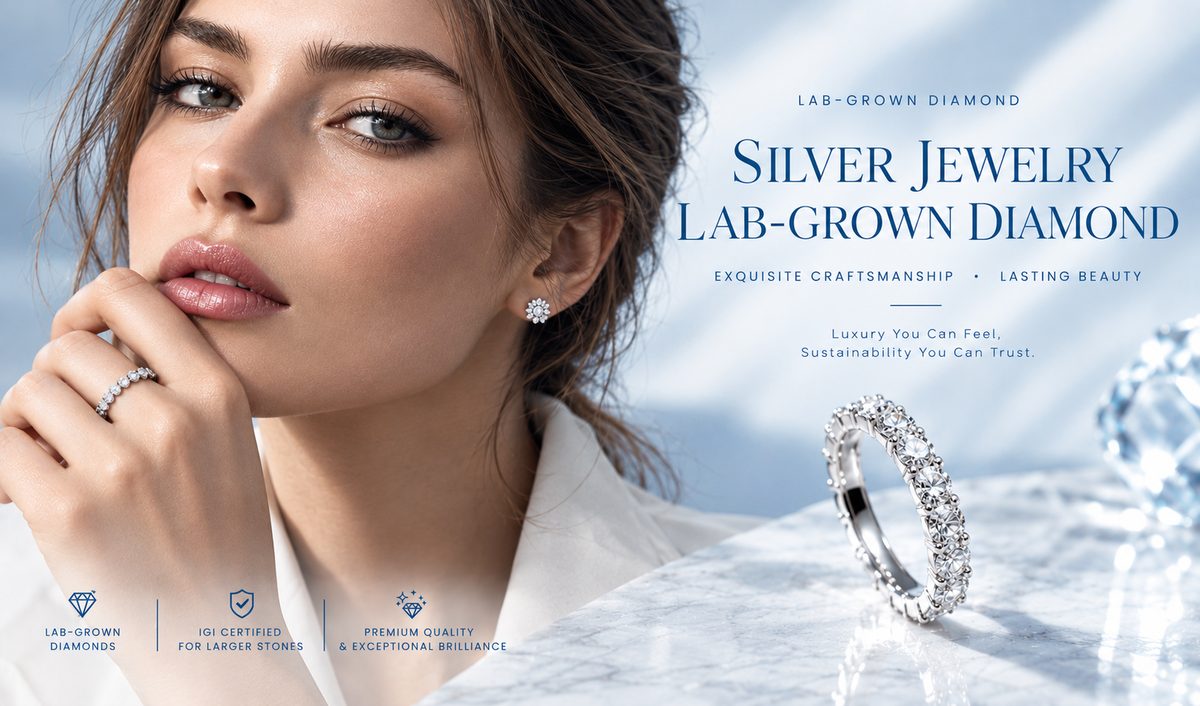
Documentation for a band
Parcel-level grading plus a written specification, rather than a report per stone.
A grading report per stone would cost more than the stones themselves in a band of this type, so the standard is a parcel specification: total carat weight, stone size range, colour and clarity bands, matching tolerance, and the metal with its hallmark. Where the band contains one larger centre stone, that stone should carry its own report.
The specification should state the matching tolerance numerically, because in a continuous run the tolerance is what the eye actually notices. Where a band contains a stone significant enough to be sold on its own, the guide to lab grown diamond certification sets out what that report should contain.
What to check before ordering
Six points that prevent the resizing problem and the mismatch problem.
Confirm the size against a fitting at the temperature the ring will be worn. Confirm whether the band is full or half eternity, and whether resizing will be possible. Confirm band width and stone size, and check the total carat weight against the stone count. Confirm the metal and whether the band will match the engagement ring. Confirm how the two rings sit together, ideally with samples. And confirm the parcel specification and matching tolerance in writing.
All six take minutes at the order stage and one of them is expensive to discover afterwards.
FAQ
How much is a lab diamond eternity band?
It depends on stone size, stone count, band width and whether the band is full or half eternity. A narrower half eternity band with small stones contains far fewer stones than a full band with larger ones, and total carat weight alone does not describe the piece. Ask for stone size, count and total weight together.
Can a lab diamond eternity band be resized?
A half eternity band usually can be adjusted by one or two sizes, because the plain underside provides a place to work. A full eternity band generally cannot, because the stones run the whole way round and resizing means removing stones and rebuilding the ends. Specify the style with that limit in mind.
Is a lab grown diamond wedding band as good as a natural one?
The stones are diamond either way and identical in material. In a band, lab grown has two practical advantages: the price difference multiplies across dozens of stones, and matching a long run in consistent size and colour is easier when selecting from lab production.
What width should a diamond wedding band be?
Around 3 mm is the common working width for a half eternity band, because it carries visible stones without becoming heavy. Narrower bands use smaller stones and larger counts; wider bands allow larger stones but start to read as a statement ring rather than a wedding ring.
Sources and further reading
- GIA 4Cs — grading factors for matched stone runs
- GIA Report Check — verifying stone documentation
- International Gemological Institute — grading and reports
- Assay Office — hallmarking and precious metal standards
- CIBJO Blue Books — jewellery terminology and disclosure
- International Gem Society — band construction and setting reference
Next step: Tell us the band width, stone size range and whether you need full or half eternity, and whether the band must sit flush against an existing ring, and we will specify the stone count, matching tolerance and metal before quoting. Ready-stock bands and OEM programmes are both available. Contact vinico@zkzdiamonds.com or WhatsApp +86 135 3037 8229.
{“@context”:”https://schema.org”,”@type”:”FAQPage”,”mainEntity”:[{“@type”:”Question”,”name”:”How much is a lab diamond eternity band?”,”acceptedAnswer”:{“@type”:”Answer”,”text”:”It depends on stone size, stone count, band width and whether the band is full or half eternity. A narrower half eternity band with small stones contains far fewer stones than a full band with larger ones, and total carat weight alone does not describe the piece. Ask for stone size, count and total weight together.”}},{“@type”:”Question”,”name”:”Can a lab diamond eternity band be resized?”,”acceptedAnswer”:{“@type”:”Answer”,”text”:”A half eternity band usually can be adjusted by one or two sizes, because the plain underside provides a place to work. A full eternity band generally cannot, because the stones run the whole way round and resizing means removing stones and rebuilding the ends. Specify the style with that limit in mind.”}},{“@type”:”Question”,”name”:”Is a lab grown diamond wedding band as good as a natural one?”,”acceptedAnswer”:{“@type”:”Answer”,”text”:”The stones are diamond either way and identical in material. In a band, lab grown has two practical advantages: the price difference multiplies across dozens of stones, and matching a long run in consistent size and colour is easier when selecting from lab production.”}},{“@type”:”Question”,”name”:”What width should a diamond wedding band be?”,”acceptedAnswer”:{“@type”:”Answer”,”text”:”Around 3 mm is the common working width for a half eternity band, because it carries visible stones without becoming heavy. Narrower bands use smaller stones and larger counts; wider bands allow larger stones but start to read as a statement ring rather than a wedding ring.”}}]}
Part of our sterling silver rings guide.
Recommended
 Does a lab-grown diamond need Kimberley Process paperwork when shipped?Lab Grown Diamond Guide
 Is it better to buy a loose lab-grown diamond and set it, or buy finished jewelry?Lab Grown Diamond GuideHow do I choose a bypass or open ring that stays comfortable?Lab Grown Diamond Rings
 How do I choose between a solitaire, halo and three-stone ring?Lab Grown Diamond Rings
 Is Lab Grown Diamond Jewelry a Good Investment?Buying Guides
 What is a “hearts and arrows” cut, and is it available in lab-grown stones?Lab Grown Diamonds