Lab Diamond Necklace Lengths and Layering
925 sterling silver jewellery, set with lab grown diamonds and made in our own Shenzhen workshop.
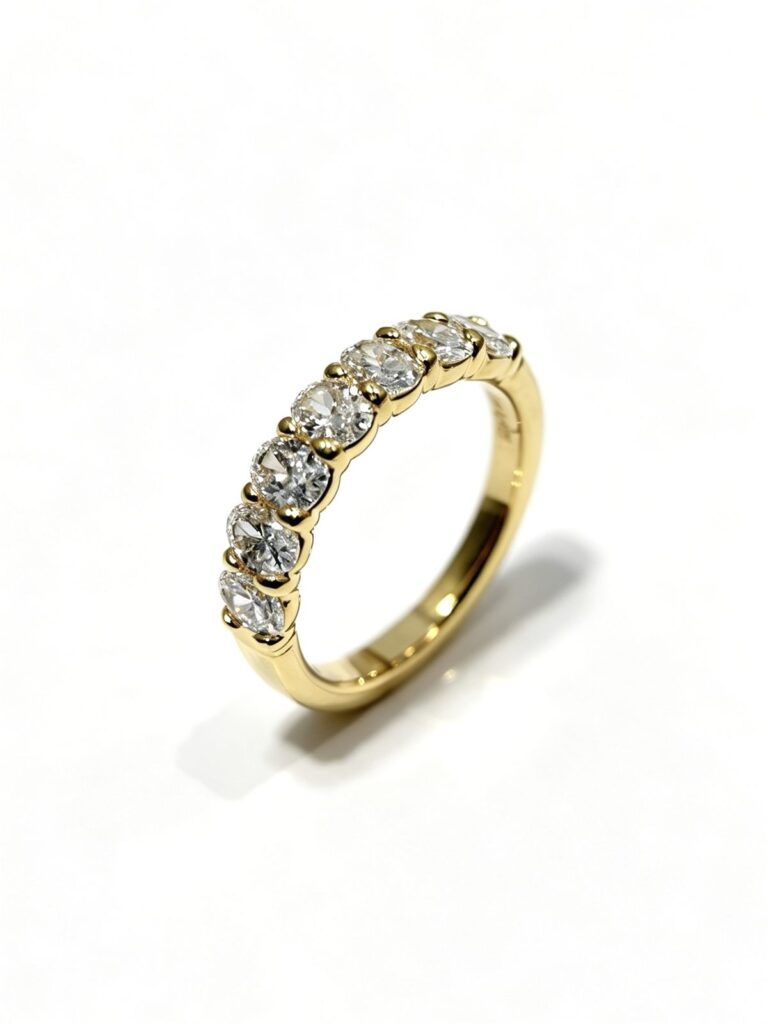
Two lab diamond necklaces bought separately, each correct on its own, often fail together. One sits a centimetre above the other and the two twist into each other within an hour; or the lighter piece rides over the heavier one and pulls it sideways. Nothing is wrong with either necklace. The set was never specified as a set. Layering is decided before production rather than after, and most of it comes down to three variables: the gap between lengths, which piece carries the weight, and whether the two find each other at the clasp.
Last updated:
What length should a lab diamond necklace be?
The length that puts the stones where the neckline leaves them visible.
There is no standard answer, because the same necklace reads completely differently on different necklines. What can be specified is the resting position: a piece intended to sit above the collarbone, one that sits on it, one that drops into the hollow below, and one that reaches the chest. Decide the resting position first, then measure to it on the wearer rather than choosing a number from a chart.
For a first piece, the collarbone position is the most versatile: it stays visible with most necklines and does not fight with a pendant worn beneath it.
The four working lengths
Each one does a different job, and the gaps between them are what make layering work.
| Position | Where it rests | What it suits | Layering role |
|---|---|---|---|
| Choker | Base of the neck | Open necklines, formal wear | Anchor layer, rarely layered with more than one |
| Collarbone | On or just below the clavicle | Most necklines, daily wear | Middle layer in a two or three piece set |
| Below collarbone | In the hollow beneath the clavicle | Pendants, V necklines | Inner layer for a pendant |
| Chest | Mid chest | Long pendants, over clothing | Outer layer, needs weight to hang straight |
How to measure a length you already wear
Measure the piece, not the neck, and measure it closed and laid flat.
Take the necklace off, close the clasp, and lay it straight along a ruler without pulling. That gives the chain length as made. Then, on the wearer, note where that length actually rests — the number and the resting position are two different facts, and the resting position is the one that matters when layering.
If no reference piece exists, run a length of string around the neck at the intended position, mark where it closes loosely, and measure the mark. A string pulled tight reads several centimetres short and is the most common reason a first order comes out too short.
Layering rules: spacing, weight order and metal
Three rules cover most layering failures.
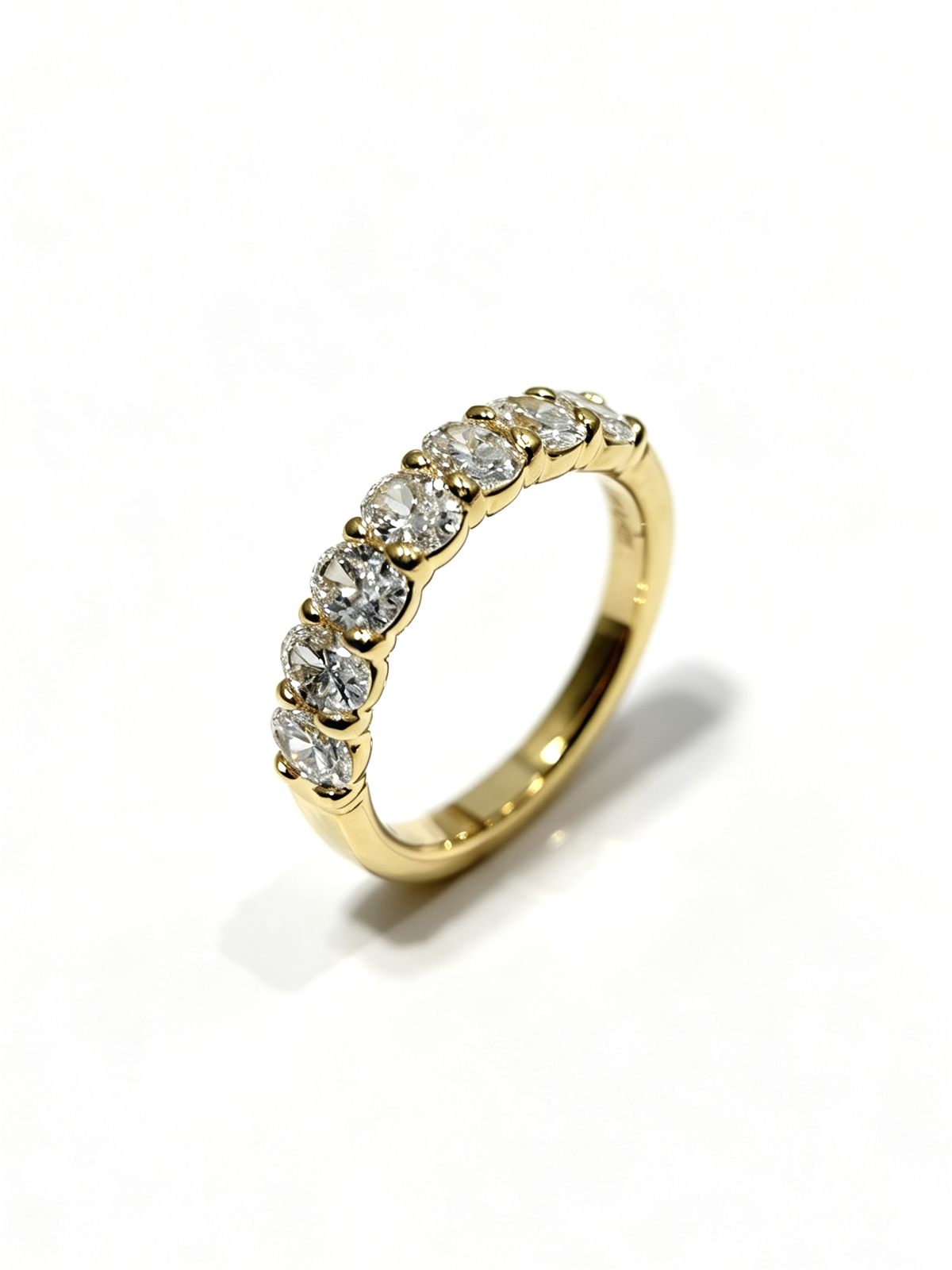
Spacing first: leave at least three centimetres between the resting positions of two layered pieces, and more if either is a line necklace rather than a chain. Two centimetres looks tidy on a display stand and tangles in wear. Weight second: the heavier piece should sit underneath, so that the lighter one rests against it rather than riding over and pulling it sideways. Metal third: mixing yellow and white metals deliberately works, but mixing chain formats in the same length does not — a box chain and a cable chain of the same length will twist around each other.
Where the two pieces have a pendant or a drop, the drops should not sit at the same height, or the eye reads them as a mistake rather than a layer.
Layering a pendant with a line
The most reliable combination, and the easiest to get wrong by a single centimetre.
A fine chain with a small pendant worn inside a longer diamond line works because the two occupy different visual zones: the pendant sits in the opening of the neckline and the line frames it at the collarbone. The failure mode is the pendant hanging level with the line, where the two compete and the pendant repeatedly passes behind the line.
The other workable pattern is the reverse — a short line and a long single stone — but it needs the long piece to be heavier, otherwise the pendant chain rides up over the line.
Where layering fails
Four failures that account for almost all layered-set complaints.
Tangling comes from insufficient spacing or from mixing chain formats. Riding comes from putting the heavier piece on top. Rotation comes from a pendant whose bail sits above its centre of mass, which makes it turn regardless of the chain. And clasp collision happens when both pieces close at the same point on the neck, so the two clasps sit on top of each other and catch.
All four are specification decisions, which means all four are avoidable at order stage rather than fixable afterwards.
What can and cannot be adjusted later
Chains can be changed; made lines cannot without rebuilding.
A pendant on a chain is easy to adjust: replace the chain, add an extender, or move the clasp. A diamond line necklace cannot be lengthened or shortened without removing stones and re-building the end, which changes the matching across the run and usually means new stones that may not match the original parcel.
If a layered set is planned, order the pieces as a set with the lengths confirmed against each other. It costs nothing at the order stage and is expensive later. The general approach to measuring a resting position is set out in the necklace length guide.
Building a layered set in one order
Six decisions to fix before production.
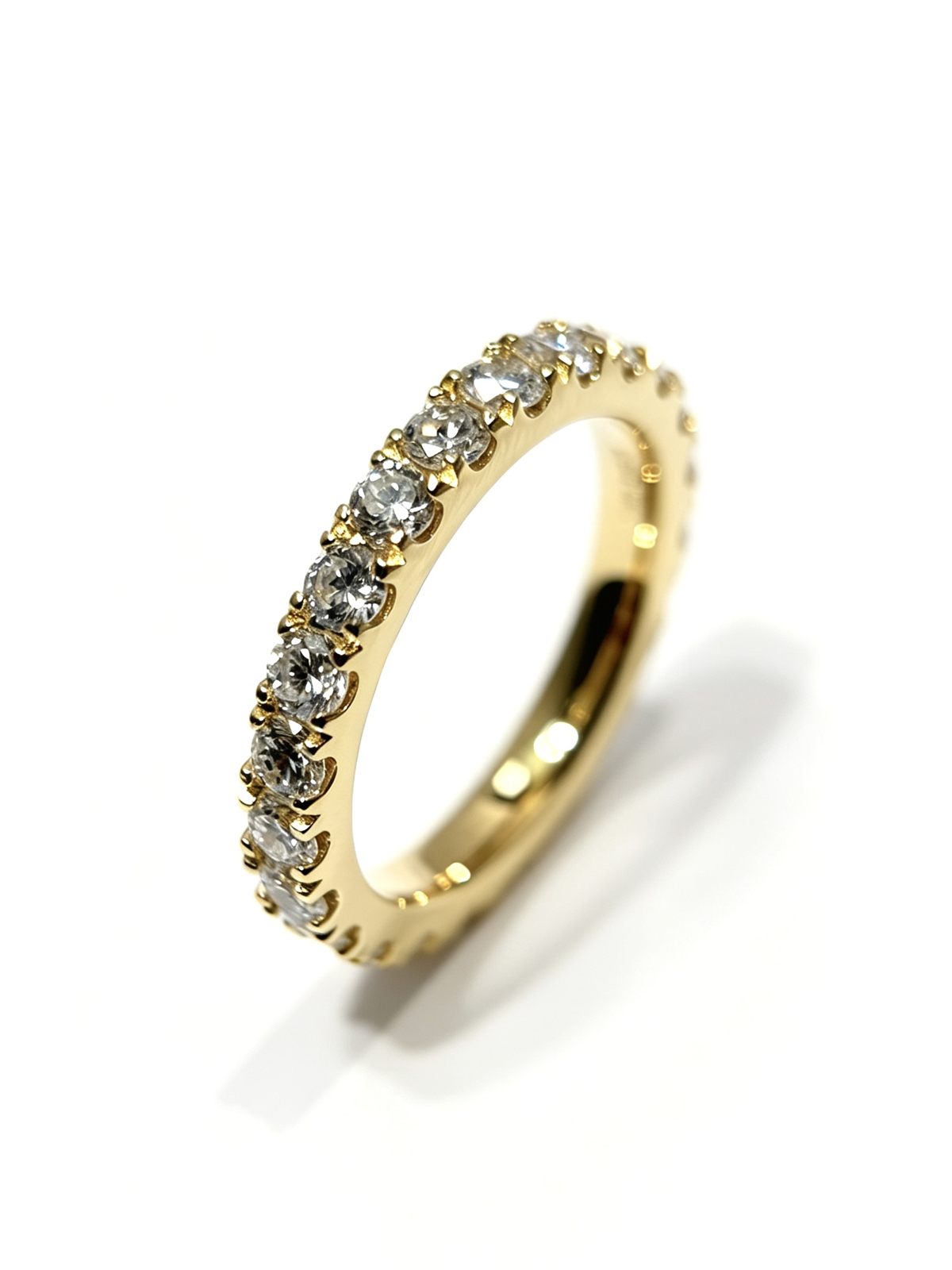
One: the resting position of each piece, measured on the wearer. Two: the gap between them, at least three centimetres. Three: which piece carries the weight and therefore sits underneath. Four: chain format, kept consistent where lengths are close. Five: clasp position, staggered so the closures do not collide. Six: metal and finish, matched or deliberately mixed.
Ordering as a set also lets the workshop match stones across both pieces where they will be seen together, which is impossible when the second piece is bought a year later.
Fit check before you commit
Wear the set for an hour before approving production or accepting delivery.
A layered set that looks correct on a display stand can fail within minutes in wear. Put both pieces on, turn the head, sit down and stand up, and put on a collared garment. If the pieces tangle, cross or ride during that hour, the spacing or the weight order is wrong, and it is far cheaper to correct on a sample than on a finished order.
Note the resting positions afterwards. Those measurements are what the repeat order should be built from.
FAQ
How do I layer a diamond necklace without tangling?
Leave at least three centimetres between the resting positions, put the heavier piece underneath, and keep chain formats consistent where the lengths are close. Clasps should be staggered so the two closures do not sit on top of each other. A set that looks tidy at two centimetres of separation will tangle in wear.
What length diamond necklace should I buy?
Choose the resting position first and measure to it on the wearer. Collarbone length is the most versatile starting point because it stays visible across most necklines. Measure a piece you already own with the clasp closed and laid flat, or use a loose string and mark the closure point rather than pulling it tight.
Can I layer a silver necklace with a gold one?
Yes, deliberate metal mixing is a normal styling choice. What does not work well is mixing chain constructions at similar lengths: a box chain and a cable chain of the same length twist around each other regardless of colour. Keep formats consistent where the pieces sit close together.
How long should a pendant necklace be?
Pendant length is set by where the stone should sit relative to the neckline, then checked with the garment it will be worn with. When layering a pendant under a diamond line, keep the two at visibly different heights so the pendant does not repeatedly pass behind the line.
Sources and further reading
- GIA 4Cs — grading factors relevant to matched stones
- GIA Report Check — verifying stone documentation
- International Gemological Institute — diamond grading and reports
- The Silver Institute — silver chain behaviour and alloys
- Assay Office — precious metal standards
- CIBJO Blue Books — jewellery terminology and disclosure
Next step: Send the resting positions you want for each layer, the gap between them and the metal you are working in, and we will build the set as one order so the lengths, clasps and matching are confirmed against each other before production. Ready-stock pieces and OEM programmes are both available. Contact vinico@zkzdiamonds.com or WhatsApp +86 135 3037 8229.
Part of our 925 sterling silver jewelry guide.
Recommended
 Does a lab-grown diamond need Kimberley Process paperwork when shipped?Lab Grown Diamond Guide
 Is it better to buy a loose lab-grown diamond and set it, or buy finished jewelry?Lab Grown Diamond Guide
 Is Lab Grown Diamond Jewelry a Good Investment?Buying Guides
 What is a “hearts and arrows” cut, and is it available in lab-grown stones?Lab Grown DiamondsDoes a lab-grown diamond need an appraisal, and what does one include?Lab Grown Diamonds
 Custom Lab Grown Diamond Jewelry: A Step-by-Step GuideCustom Jewelry